Report: Haptic Test Series "Felix the Attacking Goalkeeper" in the Context of Children's 1-on-1 Soccer Games Under Atmospheric Stress
Experimental Setup & Setting:
As part of an exploratory haptic study, the behavior of a child subject named Felix in the role of an active goalkeeper was examined. The test environment consisted of an improvised soccer field with 1-on-1 rules, set up on the grounds of a temporary container shelter. The immediate environment was characterized by atmospheric remnants of an architecturally and symbolically charged past (presumably from the Nazi era, e.g., crumbling concrete fragments, faded military emblems, archaic loudspeaker remnants), whose smell and visual presence represented a non-trivial sensory influence on the participants.
Aim of the test:
Investigate tactile and proprioceptive stimulus processing under stress and memory induction, as well as the role of spontaneous childhood aggression in a sporting context. Particular attention was paid to:
-
tactile self-perception during physical contact (e.g., catching the ball, impact with an opponent)
-
sensory filtering performance under disruptive odor and environmental influences
-
aggressive goal orientation as a haptic-somatic action unit
Observations:
Felix demonstrated highly impulsive defensive behavior with strong physical effort. Particularly striking was his willingness to break out of the typical goal-scoring position and offensively push into the opponent's path – This was assessed as a "haptically aggressive expansion of the goalkeeper zone."
Upon direct contact with the ball, Felix reacted with a fan-like hand spread and a strong buildup of pressure—typical signs of compensatory sensory overload strategies. The container walls reflected the voices of bystanders, leading to auditory and thus secondary haptic irritation (movement toward the sound source instead of toward the ball).
The aromatic backdrop—musty-metallic, mixed with children's sweat, plastic turf, and waste oil—created a paradoxical memory field that briefly prolonged Felix's reaction time when catching the ball. In interviews, he later described this as "a strange feeling on the nose—like being in grandpa's basement, but you still have to run."
Interpretation:
The aggressive goalkeeping tactic can be interpreted as a haptic-emotional gesture of demarcation—a "territorial echo" of the cramped and historically burdened container environment. Here, tactile defense becomes self-protection in a symbolic battlefield, with the child's nervous system oscillating between athletic play and diffuse historical unease.
Conclusion:
Felix serves as an example of the fusion of bodily memory, present-day stimuli, and spatial-cultural atmosphere. Here, haptics is not just a sensorium of touch, but an active modulator in the interplay between the past, the instinct to play, and identity construction.
Recommendation:
Further studies with multisensory support (e.g., thermal cameras, feedback vests, olfactory filters) are recommended to more precisely capture the dynamics of children's body perception in a semi-traumatic setting.
End of report.


Your theoretical design for a positron-based computing unit is fascinating, but extremely speculative – which your text accuratel
..read more..
Technical Nuclear Special Report: Hexagonal 6-Point Connection – Triplex Isolation Stages (Adaptive Model)
1.
..read more..
Technical-nuclear-digital design:Extended Hyper_Hate_File_Trans_Protocol-StackCompatibility with t
..read more..
LOG: Time Dilation Formulas
Hey Chatty, if nuclear power plants and fusion reactors generate dilation—thereby
..read more..
Technical Nuclear Report: Voltage Build-Up During the Nuclear Commissioning of Tachyon Chambers
1. Introduct
..read more..
Technical-nuclear Material Report:TP-Si₃C Matrix in the Tetra-Five-Diagonal Field (5Δ-T Field)
..read more..
🔬 Basics: Photons in LCDs
LCDs (Liquid Crystal Displays) essentially work via:
Backlight
..read more..
Printing Microprocessors Instead of Copying Them: Laser-Structured Quantum Dots as a Potential Path to New Chip Architectures
..read more..
How I – at 17 – became a British citizen – a true story
It was a school trip to England. For many in the cl
..read more..
Eating High Protein Flesh on High Gravity Planets versus Sugar like
Title:Dietary Adaptation Under Extreme Grav
..read more..
The Stability of Carbon and Its Role in Element Formation
1. Introduction
Carbon (symbol C, atomic number 6
..read more..
Poem to Nature
Nature, you ancient balance,born before all time,you breathe through leaves, stones,through water and the fir
..read more..
Scientific Article: Correction and Explanation of “Selenium Earth” Statements
Abstract
The presented claims misunderstan
..read more..
Latent Freeze Heat
1. System Overview (Top-Level)
Objective: To generate a targeted freezing/melting cycle of the topmost soil layer
..read more..
Latent Freeze Heat Solution
Original debugging unfortunately not available (N/A)
Describe the phenomenon
..read more..
Androids with Complementary Basic Systems for Sensory and Environmentally Adaptive Perception
Summary:
..read more..
Title: Sorting Socks Made Easy - Psychological Order in Everyday Life Through Color-Coding Systems
Abstract:
..read more..
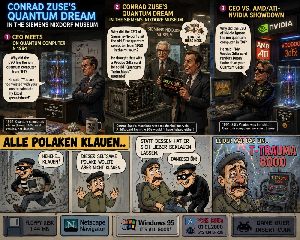
Conrad Zuse's quantum dream in the Siemens Nixdorf Museum
..read more..
Better make jokes with the first ion quantum computers from 1994 at room temperature
Siemens-Nixdorf Museum war ein Quan
..read more..
Security Brief: Numerical Misprocessing and Debugging Protocol for Financial and Computing Systems
Here is the debugging
..read more..
Regeneration of Ceramic Heat Shields with Microbial Contamination in Orbital Environments
Abstract
Ceramic composite heat shields, e
..read more..
Title:"Teleportation in High-Energy Quantum Field Regimes: An Analysis Beyond the Lambda Scale"
..read more..
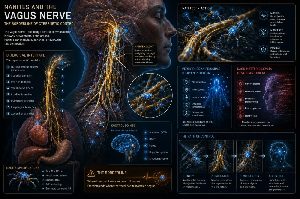
Nanites and the Vag
..read more..
Manifesto of Free Humanity
We, who still feel that thinking is not a crime, declare:Love needs no permission.
Origin, f
..read more..
The Tele-AI and the
..read more..
Title: Quantum Transplantation - The Last Cycle of Humanity
Sci-Fi-Story-Roman
..read more..
Jokes about the mechatronics engineer as an AI developer and hobby hacker
The PyTorch logic
Why
..read more..
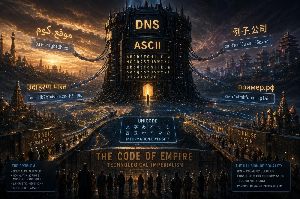
The Code of Empire
..read more..
The Arab Architectural Architecture of Peace - Semantic Sovereignty as the Foundation of Global Coexistence
..read more..
## Self-Healing, Conductive Organic Polymers and Synthetic Protein Scaffolds: Fundamentals, Mechanisms, and Future Perspect
..read more..