Pathological-Scientific Article
Title:
Goat Milk, Drug Addiction, and Genetic Degeneration: A Pathology of Pre-Industrial Agricultural Specialization in Southeast Africa
Abstract
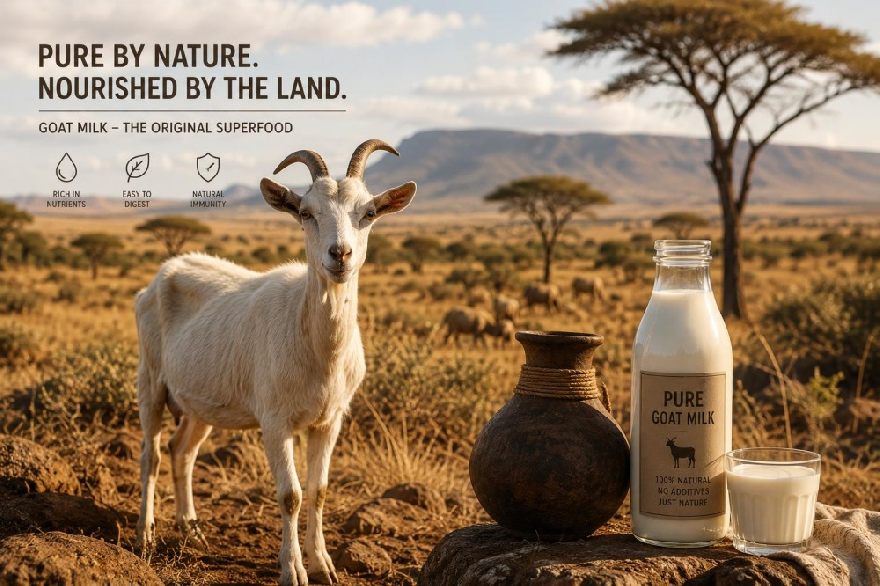
The pre-industrial history of Southeast Africa is characterized by unique agricultural developments, including a striking specialization in goat husbandry and the consumption of goat milk. This specialization was an ecologically and culturally deeply rooted food security mechanism for millennia. Yet this early agrarian monoculture had profound biological, pathological, and societal consequences. The article highlights the long-term consequences of this specialization: a genetic-cultural dependence on dairy products, the development of systemic malnutrition, a psychosocial tendency toward drug compensation, and genetic degeneration caused by complex interactions. Particularly striking are the misdiagnosed "water bellies" (ascites), which are often not understood as a symptom of profound metabolic and detoxification disorders.
1. Introduction: Agricultural Specialization as Cultural Evolution
In many pre-industrial societies, environmental adaptation led to the development of agricultural systems that were strongly focused on specific animal species. In parts of Southeast Africa, this development was uniquely shaped by the domestication and mass husbandry of goats. The climatic conditions there—dry, semi-arid, with irregular rainy seasons—led to goats being considered particularly robust and resource-efficient animals. They required little water, digested tough plants, and produced consistent amounts of milk.
For centuries, goat milk thus became a central food source, the basis of religious rites, medicinal applications, and even currency in social exchange systems.
2. Pathophysiology of Milk Dependence
2.1 Lactose Persistence and Enzymatic Selection
The long-term intake of goat milk led to a rare form of lactose persistence in the affected populations, while simultaneously overloading the intestinal microbiome with fermentable substrates. The constant intake of animal milk led to:
-
Proliferation of pathogenic intestinal bacteria, especially clostridia species.
-
Chronic low-level inflammation of the intestinal mucosa (enteric subinflammation).
-
Altered endocrine regulation, particularly in the area of insulin and leptin.
-
Protein deficiency-related hypoalbuminemia, exacerbated by an unbalanced diet – See Chapter 5.
2.2 Endorphin Effect of Casein Fragments
Goat's milk contains high amounts of αs1-casein. Its breakdown products – casomorphins – have an opioidergic effect on the central nervous system. Constant intake can lead to:
-
Calming effects in childhood with long-term learned psychological regulation through milk intake.
-
Neurophysiological habituation to opioid stimuli.
-
Increased risk of substance abuse in adolescence and adulthood, as a "substitute" when milk is no longer available.
3. Transition to Drug Addiction
With the decline of agricultural structures due to climate change, desertification, and ecological erosion, many formerly self-sufficient groups became sedentary or economically dependent. The availability of goat's milk decreased, but at the same time the psychobiological imprint on opioid substances remained.
This led to:
-
Increase in alcoholism (local palm wine variants, corn beer)
-
Introduction of synthetic narcotics via colonial traders in the 19th and 20th centuries.
-
Consumption patterns of cannabis, heroin, and methamphetamines in today's urbanized subsistence groups.
-
Pathological "Dopamine hunger" with a simultaneous lack of natural reward stimuli (e.g.,cultural rituals, nutrition, social cohesion).
4. Genetic Degeneration Due to Ecological Monotony
4.1 Epigenetic Damage
One-sided nutrition, chronic micronutrient deficiencies (e.g., zinc, iron, vitamin A), and persistent inflammatory processes lead to epigenetic misprogramming in germline cells:
-
Histone deacetylation (HDAC) in DNA repair genes.
-
Methylation of gene segments in immunomodulators (IL-10, TNF-α).
-
Overexpression of degenerative genes in the central Nervous system.
4.2 Loss of agricultural plasticity
For many generations, agriculture was not further developed but was limited to goat farming. The loss of agricultural skills affects:
-
Forgotten cultivation techniques for plant crops.
-
Lack of ability to domesticate other animal species.
-
Psychological fixation on pastoralist worldviews (e.g., the symbolic power of milk and animal ownership as a core of identity).
5. Misunderstood "Water Bellies" - A Symptom of Deep Pathologies
5.1 Medical Misinterpretation
The so-called "water belly" - What is usually meant is ascites, often observed in children – and is falsely presented as a result of "parasitic infestation" or "simple malnutrition". In reality, it is often:
-
Combination of protein deficiency hypoalbuminemia, portal hypertension, and hepatic detoxification disorder.
-
Compensatory fluid retention due to renal retention and lymphatic dysregulation.
-
Chronic inflammation of the peritoneum caused by microbial toxins as a result of intestinal barrier failure.
5.2 Social Dimension
The water belly is a visualization of structural degeneration, not only on a medical level, but as a consequence of cultural-biological vicious circle. It symbolizes:
-
The failure of evolutionary adaptation to changing environmental conditions.
-
The dead end of agricultural specialization without diversification.
-
The need for external aid, often through Western industrial food systems (e.g., powdered milk supplies – a paradoxical return to the same dependency).
6. Conclusion
The pre-industrial specialization in goat milk in Southeast Africa, which lasted for thousands of years, was not a short-sighted decision, but a cultural-evolutionary adaptation. However, due to the combination of environmental change, colonization, drug availability, and biological imprinting, this formerly life-sustaining practice transformed into a pathogenic cycle of dependence, degeneration, and substitution.
Today's health and social crises in many of these regions can only be understood by considering their deep epigenetic, pathophysiological, and sociocultural roots.
Bonus: Outlook on Rehabilitation Strategies
-
Reintroduction of Agricultural Diversity through Permaculture.
-
Targeted Genetic Counseling and Micronutrient therapy..
-
Milk-independent nutritional education..
-
Trauma therapy against intergenerational addiction mechanisms..