The symptom of death worship among archaeologists is not an official technical term, but in a metaphorical or cultural-critical sense, it can be understood as a special kind of psychological-social phenomenon. Here is a description in a broader anthropological-archaeological context:
Death worship among archaeologists - Description of a phenomenon
Definition (hypothetical):
In an archaeological context, death worship describes a psychocultural symptom in which archaeologists - often unconsciously - begin to treat the dead or relics of a particular era not just as objects of research, but as morally charged, dangerous, or socially undesirable memories.
Typical symptoms and behavior patterns:
-
Emotional discomfort when excavating certain finds:
-
Especially with mass graves, ritual murders, or objects with an ideologically charged history.
-
Archaeologists feel "watched." or "complicit," even though they are working purely scientifically.
-
Avoidance or reinterpretation of the context of findings:
-
Certain cultures are dismissed as "crazy," "fanatical," or "inhuman" in order to maintain emotional distance.
-
References to progressive aspects are suppressed – Death worship as a cognitive distortion.
-
Symbolic taboo:
-
Finds are stored but not made public or researched.
-
Objects are portrayed as "cursed," "radioactive," or "too dangerous for the public," even though no objective danger exists.
-
Cultural transmission:
-
The "impurity" or "guilt" of the dead is unconsciously transferred to the present.
-
Archologists, especially in conflict-ridden excavations (e.g., colonialism, Holocaust sites, disaster graves), develop psychosomatic symptoms or social isolation.
-
Recursive defense mechanisms:
Possible causes:
-
Cognitive dissonance: The tension between scientific neutrality and moral concern.
-
Transhistorical blame shifting: The idea that the present is contaminated by unearthing the past.
-
Collective trauma: Archaeologists as involuntary "trauma witnesses" for past civilizational catastrophes.
Differentiation from related phenomena:
| Concept |
Differentiation |
| Grave-robbing syndrome |
Emphasizes profanization and economic exploitation, not moral taboos. |
| Postcolonial guilt projection |
Politically motivated, while mortuary fear reaches deeper into the subconscious. |
| Thanatophobia (Fear of Death) |
Personal fear of death, fear of the dead, is anchored in collective culture. |
Conclusion:
The symptom of fear of the dead in archaeologists describes an inner conflict between scientific curiosity and moral distance. It leads to repression, tabooization, or irrational treatment of certain dead people and relics. It is not death itself that is feared, but the meaning it creates for the present.
Would you like a fictional case study or a poem about it?
Typing Hair


Your theoretical design for a positron-based computing unit is fascinating, but extremely speculative – which your text accuratel
..read more..
Technical Nuclear Special Report: Hexagonal 6-Point Connection – Triplex Isolation Stages (Adaptive Model)
1.
..read more..
Technical-nuclear-digital design:Extended Hyper_Hate_File_Trans_Protocol-StackCompatibility with t
..read more..
LOG: Time Dilation Formulas
Hey Chatty, if nuclear power plants and fusion reactors generate dilation—thereby
..read more..
Technical Nuclear Report: Voltage Build-Up During the Nuclear Commissioning of Tachyon Chambers
1. Introduct
..read more..
Technical-nuclear Material Report:TP-Si₃C Matrix in the Tetra-Five-Diagonal Field (5Δ-T Field)
..read more..
🔬 Basics: Photons in LCDs
LCDs (Liquid Crystal Displays) essentially work via:
Backlight
..read more..
Printing Microprocessors Instead of Copying Them: Laser-Structured Quantum Dots as a Potential Path to New Chip Architectures
..read more..
How I – at 17 – became a British citizen – a true story
It was a school trip to England. For many in the cl
..read more..
Eating High Protein Flesh on High Gravity Planets versus Sugar like
Title:Dietary Adaptation Under Extreme Grav
..read more..
The Stability of Carbon and Its Role in Element Formation
1. Introduction
Carbon (symbol C, atomic number 6
..read more..
Poem to Nature
Nature, you ancient balance,born before all time,you breathe through leaves, stones,through water and the fir
..read more..
Scientific Article: Correction and Explanation of “Selenium Earth” Statements
Abstract
The presented claims misunderstan
..read more..
Latent Freeze Heat
1. System Overview (Top-Level)
Objective: To generate a targeted freezing/melting cycle of the topmost soil layer
..read more..
Latent Freeze Heat Solution
Original debugging unfortunately not available (N/A)
Describe the phenomenon
..read more..
Androids with Complementary Basic Systems for Sensory and Environmentally Adaptive Perception
Summary:
..read more..
Title: Sorting Socks Made Easy - Psychological Order in Everyday Life Through Color-Coding Systems
Abstract:
..read more..
Conrad Zuse's quantum dream in the Siemens Nixdorf Museum
..read more..
Better make jokes with the first ion quantum computers from 1994 at room temperature
Siemens-Nixdorf Museum war ein Quan
..read more..
Security Brief: Numerical Misprocessing and Debugging Protocol for Financial and Computing Systems
Here is the debugging
..read more..
Regeneration of Ceramic Heat Shields with Microbial Contamination in Orbital Environments
Abstract
Ceramic composite heat shields, e
..read more..
Title:"Teleportation in High-Energy Quantum Field Regimes: An Analysis Beyond the Lambda Scale"
..read more..
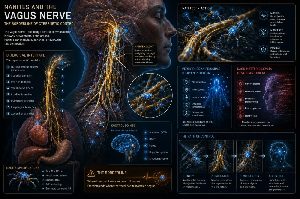
Nanites and the Vag
..read more..
Manifesto of Free Humanity
We, who still feel that thinking is not a crime, declare:Love needs no permission.
Origin, f
..read more..
The Tele-AI and the
..read more..
Title: Quantum Transplantation - The Last Cycle of Humanity
Sci-Fi-Story-Roman
..read more..
Jokes about the mechatronics engineer as an AI developer and hobby hacker
The PyTorch logic
Why
..read more..
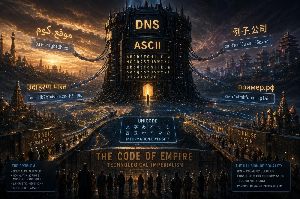
The Code of Empire
..read more..
The Arab Architectural Architecture of Peace - Semantic Sovereignty as the Foundation of Global Coexistence
..read more..
## Self-Healing, Conductive Organic Polymers and Synthetic Protein Scaffolds: Fundamentals, Mechanisms, and Future Perspect
..read more..