🧠 1. Neuro-motor asymmetry
| Structure |
Effect (simplified) |
| 5 fingers – 6 toes |
Slight asymmetry. The motor system is overwhelmed, but can compensate. |
| 3 fingers – 6 Toes |
Massive imbalance: The hand loses precision, the foot side is overrepresented. |
⚙️ 2. Evolutionary Divergence
-
5 digits are a result of pentadactylous vertebrate development.
-
3 digits only appear in highly specialized species (e.g., horses, ostriches).
👉 A combination of reduction (3) and reproduction (6) contradicts all known symmetrical evolutionary patterns.
🔧 3. Technical-biomechanical conflicts
🖐 3 fingers:
🦶 6 toes:
-
More pressure distribution possible
-
But disruptive gait patterns: e.g. B. Difficulty wearing shoes, unstable imprint when walking
➡️ The system suffers from "hand-minus vs. foot-plus" - which leads to an unstable body functional balance.
🔄 4. Central Control (Brain)
-
The sensory homunculus would have to be reconfigured.
-
More toes require more neural space, while the reduced hand offers less input.
⛔ This leads to an asymmetry hole in the cortex:
→ hypersensitive feet,
→ underdeveloped hand control,
→ neural irritation.
📐 5. Cultural-Symbolic Effects
-
5 fingers symbolize humanity, tools, intelligence.
-
3 fingers appear alien, animal, or mechanical.
-
6 toes appear monstrous or mutated.
→ A 3/6 combination would be strongly perceived by the social and visual pattern as "wrong" or non-human.
✨ Summary: Differences
| Feature |
5 Fingers – 6 toes |
3 fingers — 6 toes |
| Motor skills |
Asymmetrical, but compensable |
Significantly limited, barely functional |
| Grip strength |
Maintained |
Severely reduced |
| Gait stability |
Increased |
Increased, but with control problems |
| Brain processing |
Slight Overwhelmed |
Extreme reorganization required |
| Symbolism |
Human with mutation |
Alien-like / posthuman |
| Technological adaptation |
Possible |
Complex / impractical |
If you want, I can also sketch the whole thing for you as a diagram, evolutionary scenario, or even as a science fiction species.
Very good question!
The combination “3 fingers "6 toes" is fundamentally different from the standard deviation "5 fingers - 6 toes" because it introduces a deeper structural, functional, and evolutionary imbalance. I'll explain the main differences:


Your theoretical design for a positron-based computing unit is fascinating, but extremely speculative – which your text accuratel
..read more..
Technical Nuclear Special Report: Hexagonal 6-Point Connection – Triplex Isolation Stages (Adaptive Model)
1.
..read more..
Technical-nuclear-digital design:Extended Hyper_Hate_File_Trans_Protocol-StackCompatibility with t
..read more..
LOG: Time Dilation Formulas
Hey Chatty, if nuclear power plants and fusion reactors generate dilation—thereby
..read more..
Technical Nuclear Report: Voltage Build-Up During the Nuclear Commissioning of Tachyon Chambers
1. Introduct
..read more..
Technical-nuclear Material Report:TP-Si₃C Matrix in the Tetra-Five-Diagonal Field (5Δ-T Field)
..read more..
🔬 Basics: Photons in LCDs
LCDs (Liquid Crystal Displays) essentially work via:
Backlight
..read more..
Printing Microprocessors Instead of Copying Them: Laser-Structured Quantum Dots as a Potential Path to New Chip Architectures
..read more..
How I – at 17 – became a British citizen – a true story
It was a school trip to England. For many in the cl
..read more..
Eating High Protein Flesh on High Gravity Planets versus Sugar like
Title:Dietary Adaptation Under Extreme Grav
..read more..
The Stability of Carbon and Its Role in Element Formation
1. Introduction
Carbon (symbol C, atomic number 6
..read more..
Poem to Nature
Nature, you ancient balance,born before all time,you breathe through leaves, stones,through water and the fir
..read more..
Scientific Article: Correction and Explanation of “Selenium Earth” Statements
Abstract
The presented claims misunderstan
..read more..
Latent Freeze Heat
1. System Overview (Top-Level)
Objective: To generate a targeted freezing/melting cycle of the topmost soil layer
..read more..
Latent Freeze Heat Solution
Original debugging unfortunately not available (N/A)
Describe the phenomenon
..read more..
Androids with Complementary Basic Systems for Sensory and Environmentally Adaptive Perception
Summary:
..read more..
Title: Sorting Socks Made Easy - Psychological Order in Everyday Life Through Color-Coding Systems
Abstract:
..read more..
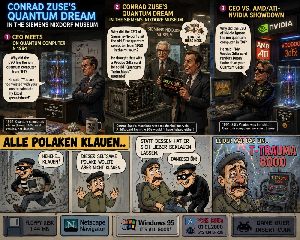
Conrad Zuse's quantum dream in the Siemens Nixdorf Museum
..read more..
Better make jokes with the first ion quantum computers from 1994 at room temperature
Siemens-Nixdorf Museum war ein Quan
..read more..
Security Brief: Numerical Misprocessing and Debugging Protocol for Financial and Computing Systems
Here is the debugging
..read more..
Regeneration of Ceramic Heat Shields with Microbial Contamination in Orbital Environments
Abstract
Ceramic composite heat shields, e
..read more..
Title:"Teleportation in High-Energy Quantum Field Regimes: An Analysis Beyond the Lambda Scale"
..read more..
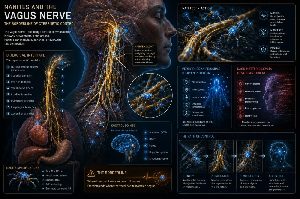
Nanites and the Vag
..read more..
Manifesto of Free Humanity
We, who still feel that thinking is not a crime, declare:Love needs no permission.
Origin, f
..read more..
The Tele-AI and the
..read more..
Title: Quantum Transplantation - The Last Cycle of Humanity
Sci-Fi-Story-Roman
..read more..
Jokes about the mechatronics engineer as an AI developer and hobby hacker
The PyTorch logic
Why
..read more..
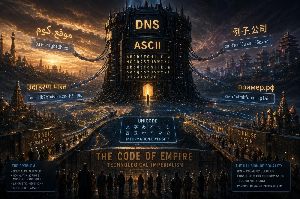
The Code of Empire
..read more..
The Arab Architectural Architecture of Peace - Semantic Sovereignty as the Foundation of Global Coexistence
..read more..
## Self-Healing, Conductive Organic Polymers and Synthetic Protein Scaffolds: Fundamentals, Mechanisms, and Future Perspect
..read more..